The 50/30/20 Budget Rule Explained (With Examples)
Learn how the 50/30/20 rule splits your income into needs, wants, and savings — plus real examples and when to adjust the percentages.

Jordan Avery
Contents
What is the 50/30/20 rule?
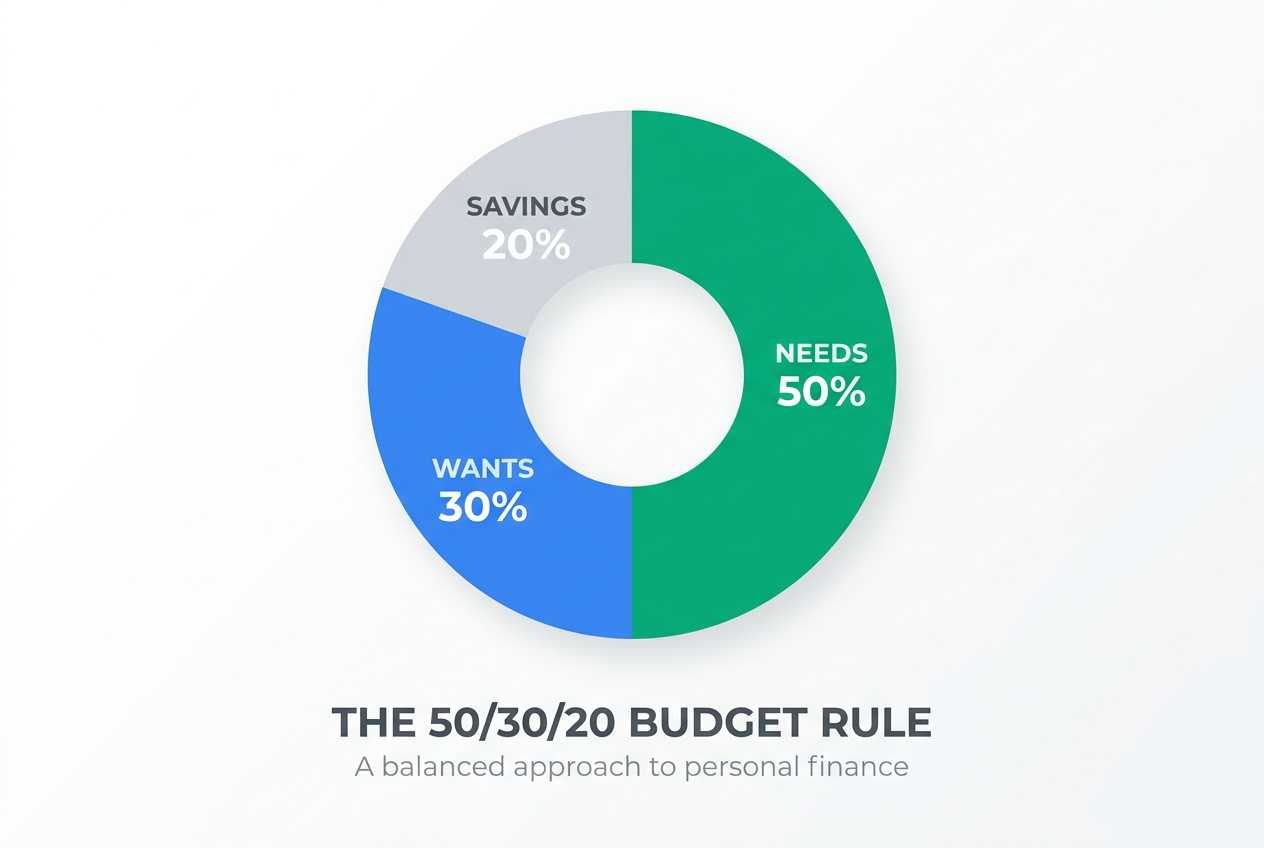
The 50/30/20 rule is one of the simplest budgeting frameworks. You divide your after-tax income into three buckets: 50% to needs, 30% to wants, and 20% to savings and debt repayment.
50% — Needs
Needs are the essentials you can't skip: rent or mortgage, utilities, groceries, insurance, minimum debt payments, and transportation to work.
30% — Wants
Wants are the things that make life enjoyable but aren't essential: dining out, subscriptions, hobbies, travel, and upgrades.
20% — Savings & debt
This bucket builds your future: emergency fund, retirement contributions, and extra debt payments beyond the minimum.
When to adjust the percentages
In high-cost cities, needs may exceed 50%. That's fine — shrink wants temporarily. If you're aggressively paying off debt, you might run 50/20/30 instead.
Solve this in 30 seconds
Put this guide into action with the Monthly Budget Calculator — free, instant results.
Frequently asked questions
Get the free budget spreadsheet
Put this article into action with our free, ready-to-use spreadsheet.